World Kidney Day 2026: Simple Daily Habits to Protect Your Kidneys and Heart Health

Every year, World Kidney Day reminds us how vital our kidneys are to overall health. While most people associate kidney problems with urinary issues, the reality is that kidney health is closely connected to heart health.
In fact, the kidney and heart health connection is stronger than many people realize. When kidneys don’t function properly, the heart often has to work harder, increasing the risk of cardiovascular disease.
That’s why World Kidney Day kidney health awareness focuses not only on kidney disease prevention but also on protecting the heart. With a few simple lifestyle habits, many people can significantly reduce their risk of both kidney and heart complications.
What Is Kidney Disease?
Kidney disease refers to a gradual loss of kidney function over time. The kidneys filter waste products, maintain fluid balance, and help regulate blood pressure.
When kidney function declines, toxins can build up in the body and affect other organs—including the heart.
According to the World Health Organization, chronic kidney disease affects about 10% of the global population (WHO, 2024). Early kidney disease awareness is essential because many people may not experience symptoms until the condition becomes advanced.
Causes & Risk Factors
Several health conditions and lifestyle factors can increase the risk of kidney disease and cardiovascular complications.
Common risk factors include:
- High blood pressure – closely linked to kidney damage
- Diabetes – a leading cause of kidney failure
- Family history of kidney disease
- Obesity or sedentary lifestyle
- Excess salt intake and poor diet for kidney health
- Smoking and excessive alcohol consumption
Managing these factors is key to preventing kidney disease and protecting long-term cardiovascular health.
Symptoms / Warning Signs
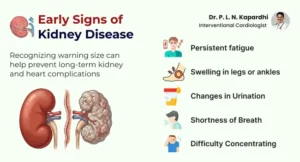
Kidney disease often develops slowly, which is why recognizing early warning signs is important.
Possible symptoms include:
- Persistent fatigue
- Swelling in the legs or ankles
- Changes in urination patterns
- Shortness of breath
- Difficulty concentrating
These symptoms can sometimes overlap with heart-related concerns, highlighting the importance of monitoring cardiovascular health and kidneys together.
Diagnosis & Tests
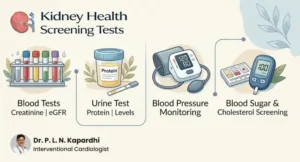
Doctors typically evaluate kidney health through simple tests that can also reveal early cardiovascular risks.
Common diagnostic tests include:
- Blood tests to check kidney function (creatinine, eGFR)
- Urine tests for protein levels
- Blood pressure monitoring
- Blood sugar and cholesterol screening
According to Dr. P L N Kapardhi, an experienced cardiologist in Hyderabad, routine screening is especially important for people with diabetes, hypertension, or a family history of kidney disease.
These evaluations also help monitor blood pressure and kidney health, which play a major role in preventing cardiovascular complications.
Treatment Options
Treatment for kidney disease depends on the underlying cause and stage of the condition.
Common management strategies include:
Lifestyle Management
Improving daily habits is often the first step in kidney disease prevention.
Medications
Doctors may prescribe medications to control blood pressure, blood sugar, or cholesterol levels.
Medical Monitoring
Regular check-ups help monitor kidney function and detect early heart-related complications.
In advanced cases, specialized treatments such as dialysis or transplant may be considered, although early intervention often prevents these outcomes.
Prevention & Heart-Healthy Tips
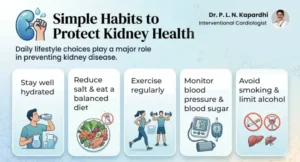
Fortunately, many cases of kidney disease can be prevented through consistent lifestyle habits.
Here are simple habits to protect kidney health:
- Drink enough water to support hydration and kidney function
- Reduce salt intake and follow a balanced diet for kidney health
- Exercise regularly to maintain a healthy weight
- Monitor blood pressure and blood sugar levels
- Avoid smoking and limit alcohol consumption
These lifestyle habits for healthy kidneys and heart support long-term wellness and reduce cardiovascular risk.
When to See a Cardiologist
Because kidney and heart health are closely linked, patients with kidney concerns may also benefit from heart evaluations.
You should consider consulting a doctor if you:
- Have persistent high blood pressure
- Have diabetes or metabolic syndrome
- Notice swelling, fatigue, or unusual symptoms
- Have a family history of kidney or heart disease
If you are looking for guidance on preventive heart care Hyderabad or a heart health check-up in Hyderabad, early consultation can help detect risks before they become serious.
Author Bio
Dr. P. L. N. Kapardhi is a Senior Interventional Cardiologist with extensive experience in preventive cardiology, coronary interventions, and cardiovascular risk management. He focuses on early detection, patient education, and personalized treatment strategies to support long-term heart health.
Reviewed and verified by Dr. P L N Kapardhi, Sr. Interventional Cardiologist, Hyderabad.
Conclusion
Kidney health and heart health are deeply interconnected. By raising kidney disease awareness on World Kidney Day 2026, we can encourage people to take proactive steps toward better long-term health.
The good news is that many kidney and cardiovascular problems can be prevented through simple habits—healthy eating, regular exercise, routine screenings, and managing blood pressure and diabetes.
Small daily choices truly make a difference in protecting both your kidneys and your heart.
Reference
World Health Organization. (2024). Kidney disease and global health.
https://www.who.int/news-room/fact-sheets/detail/kidney-disease
American Heart Association. (2025). Kidney disease and cardiovascular risk.
https://www.heart.org/en/health-topics/kidney-disease
Centers for Disease Control and Prevention. (2024). Chronic kidney disease basics.
https://www.cdc.gov/kidneydisease/basics.html
PubMed. (2023). Cardiovascular outcomes in chronic kidney disease.
https://pubmed.ncbi.nlm.nih.gov/27255807/