Understanding TAVI/TAVR: FAQ Guide by Cardiologist in Hyderabad | Dr. P L N Kapardhi
🔹 Introduction
For many patients diagnosed with severe aortic stenosis, the thought of open-heart surgery can feel overwhelming. Fortunately, advances in interventional cardiology now allow doctors to replace a diseased aortic valve using a minimally invasive procedure called TAVI (Transcatheter Aortic Valve Implantation) or TAVR (Transcatheter Aortic Valve Replacement).
This blog is a comprehensive FAQ guide, written to help patients and families understand TAVI/TAVR — how it works, who is eligible, benefits, risks, and recovery.
🔹 What is TAVI/TAVR?
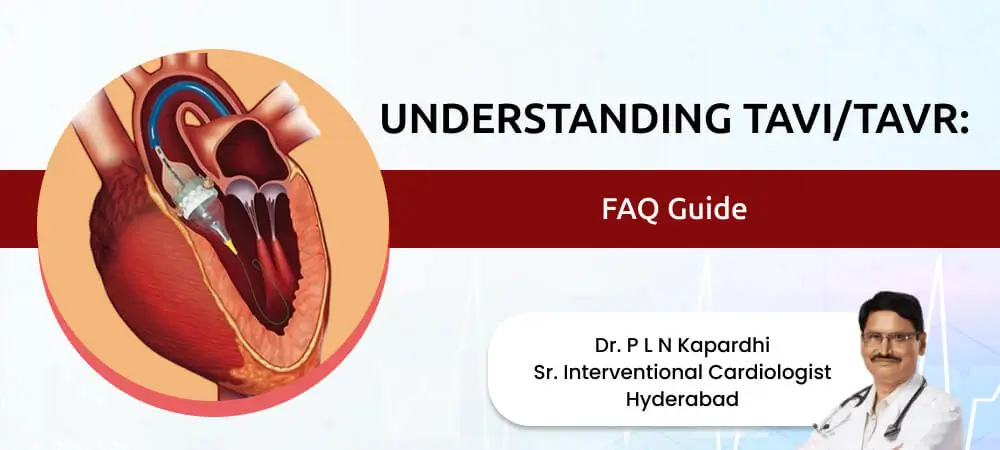
- TAVI/TAVR is a minimally invasive procedure used to replace a narrowed aortic valve that fails to open properly (aortic stenosis).
- Instead of opening the chest, doctors insert a catheter (usually through the groin) and deliver a new valve inside the old one.
- The new valve starts functioning immediately, restoring normal blood flow.
🔹 Why is TAVI/TAVR Done?
TAVI is recommended for patients with:
- Severe aortic stenosis causing symptoms such as breathlessness, chest pain, or fainting.
- High or intermediate risk for open-heart surgery due to age, frailty, or other medical conditions.
- Patients who prefer a less invasive treatment option (after thorough evaluation).
🔹 FAQ: Common Patient Questions
Q1: Who is eligible for TAVI/TAVR?
- Patients with severe symptomatic aortic stenosis.
- Elderly patients or those at high surgical risk.
- Individuals with prior chest surgery or other complicating factors.
Eligibility is decided by a Heart Team (cardiologist, cardiac surgeon, anesthetist).
Q2: How is the TAVI procedure performed?
- A small incision is made in the groin (transfemoral approach) or occasionally the chest.
- A catheter carrying a replacement valve is guided to the heart.
- The new valve is positioned inside the diseased one.
- The catheter is removed; the new valve begins working instantly.
Q3: What are the benefits of TAVI/TAVR?
- Less invasive than open-heart surgery.
- Shorter hospital stay (3–5 days on average).
- Faster recovery (back to routine activities in weeks, not months).
- Lower risk for frail or elderly patients.
- Immediate improvement in symptoms (breathing, energy, exercise tolerance).
Q4: What are the risks or complications?
Like any medical procedure, TAVI carries some risks:
- Bleeding at catheter site
- Stroke or transient ischemic attack (rare)
- Valve leakage (paravalvular regurgitation)
- Heart rhythm problems (may require pacemaker)
- Kidney injury (rare)
A detailed pre-procedure assessment reduces these risks.
Q5: How long does the new valve last?
Current studies suggest TAVI valves last 10–15 years. Long-term data is promising, especially with newer-generation valves.
Q6: What is recovery like after TAVI/TAVR?
- Patients usually walk the next day.
- Most go home within 3–5 days.
- Light activities resume within a week; full recovery in 2–4 weeks.
- Lifelong cardiology follow-up and medications (blood thinners, blood pressure control) are essential.
Q7: How does TAVI compare with surgical valve replacement?
| Aspect | TAVI/TAVR | Surgical Valve Replacement |
| Invasiveness | Minimally invasive (catheter-based) | Open-heart surgery |
| Hospital Stay | 3–5 days | 7–10 days |
| Recovery Time | 2–4 weeks | 6–12 weeks |
| Suitability | High/intermediate risk, elderly patients | Younger, low-risk patients |
| Durability (long-term) | 10–15 years (ongoing studies) | 15–20 years |
| Anesthesia | Local + sedation (usually) | General anesthesia |
Q8: Who should avoid TAVI?
TAVI may not be suitable for:
- Patients with very low surgical risk (surgery may be more durable).
- People with certain anatomical issues (small or very large valves, complex root structure).
- Patients with infection (endocarditis) or other severe valve disease requiring surgery.
Q9: What lifestyle changes are needed after TAVI?
- Take prescribed medicines regularly.
- Eat a heart-healthy diet (low salt, low fat).
- Quit smoking and limit alcohol.
- Exercise under supervision (cardiac rehab is recommended).
- Attend all follow-up appointments.
Q10: Is TAVI available in Hyderabad?
Yes ✅. TAVI is available at advanced cardiac centers in Hyderabad under expert cardiologists such as Dr. P L N Kapardhi, Senior Interventional Cardiologist, who specializes in complex valve therapies and minimally invasive heart procedures.
🔹 Comparison Table: TAVI vs. Surgery vs. Medical Therapy
| Factor | TAVI/TAVR | Surgery (SAVR) | Medication Only |
| Symptom Relief | Immediate, significant | Immediate, significant | Limited, temporary |
| Survival Benefit | Yes | Yes | No long-term survival benefit |
| Invasiveness | Minimally invasive | Highly invasive | Non-invasive |
| Recovery Time | Weeks | Months | None (symptoms persist/worsen) |
| Suitable For | High/intermediate risk | Younger, low-risk | Patients refusing/unsuitable for intervention |
🔹 Conclusion
TAVI/TAVR has revolutionized the way doctors treat severe aortic stenosis. For patients who are elderly, frail, or at higher surgical risk, it offers a safe and effective alternative to open-heart surgery — with faster recovery and lasting relief from symptoms.
If you or your loved one is diagnosed with valve disease, consult a specialized Heart Team in Hyderabad to see whether TAVI is the right option.
🔹 Disclaimer
⚠️This blog is intended for general educational purposes only and should not be taken as medical advice. Every patient is unique. Always consult your cardiologist, such as Dr. P L N Kapardhi, Senior Interventional Cardiologist in Hyderabad, to understand the best treatment options for your